David Benjamin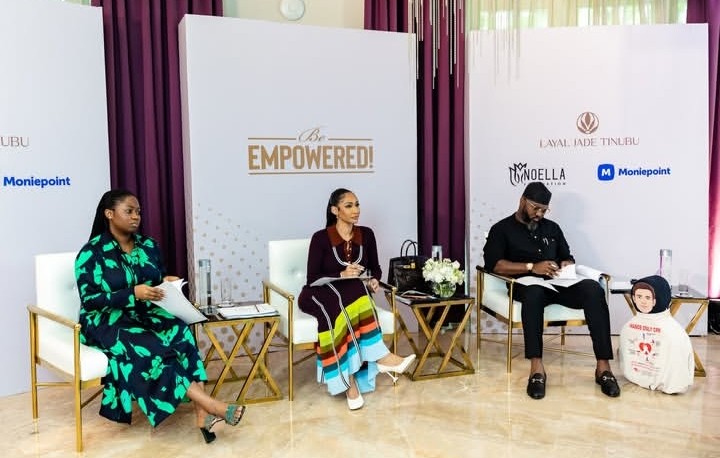
In Nigeria’s evolving social landscape, Layal Tinubu is building influence through impact rather than noise. Layal Tinubu women empowerment Nigeria initiatives continue to expand quietly across communities. Her work, particularly through structured outreach programmes, reflects a deliberate focus on women’s economic inclusion. As a result, her role is increasingly seen as a form of soft power with long term implications.
Layal Tinubu women empowerment Nigeria and strategic outreach
Unlike traditional advocacy, Layal Tinubu’s approach is practical and community focused. Her initiatives prioritize direct support for women through funding, training, and mentorship. Therefore, beneficiaries gain tools that translate into real economic outcomes.
In addition, these programmes often target women at the margins. This includes small scale entrepreneurs and those in underserved areas. Consequently, the impact reaches beyond visibility into measurable change.
Furthermore, the outreach model emphasizes continuity. It is not limited to one time interventions. As a result, participants can build sustainable livelihoods over time.
Soft power through consistency and credibility
Soft power is most effective when it is consistent. Layal Tinubu’s growing influence reflects this principle. Rather than relying on public declarations, she builds credibility through repeated action.
In addition, her initiatives create a network of beneficiaries who become advocates. This organic expansion strengthens her public perception. Consequently, her influence spreads without aggressive promotion.
Moreover, this model avoids political fatigue. Many Nigerians respond more positively to tangible support than rhetoric. As a result, her work resonates across different demographics.
Layal Tinubu women empowerment Nigeria and social capital
Empowerment initiatives also build social capital. Each programme creates relationships that extend beyond immediate beneficiaries. Therefore, communities begin to associate her name with opportunity and support.
In addition, this network effect strengthens long term influence. It creates a base of individuals who are both economically empowered and socially connected. Consequently, her reach expands across regions and sectors.
Similarly, this approach aligns with broader development goals. Women’s empowerment contributes to economic stability and growth. As a result, her initiatives carry both social and economic value.
Implications for public influence and future relevance
Although her work is not framed as political, its implications are significant. Influence built through empowerment often translates into long term relevance. Therefore, Layal Tinubu’s role may evolve as her initiatives expand.
In addition, this model reflects a shift in how influence is built in Nigeria. Public figures increasingly rely on impact driven engagement. Consequently, soft power becomes a key tool in shaping narratives.
However, sustainability remains essential. Programmes must maintain transparency and measurable outcomes. As a result, continued trust will determine future influence.
Conclusion
Layal Tinubu women empowerment Nigeria highlights a quiet but effective model of influence. Layal Tinubu continues to shape communities through consistent action and strategic outreach. As a result, her initiatives stand at the intersection of social impact and soft power. Furthermore, their long term success will depend on scale, sustainability, and continued community trust.



![[VIDEO]: Fela’s Catalogue Fully Owned, Controlled By Family — Femi Kuti](https://occidentalview.com/storage/2026/04/default_logo_69e2ad660fdea.png)