David Benjamin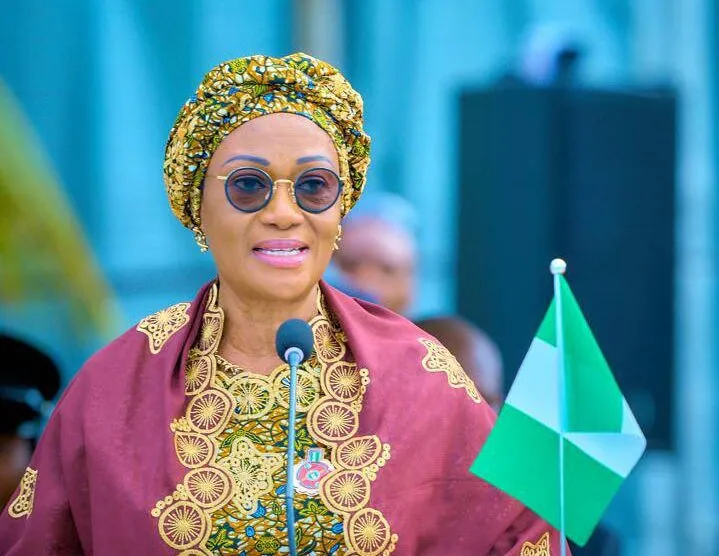
The role of Oluremi Tinubu continues to expand beyond ceremonial duties into structured social impact. First Lady Tinubu women empowerment Nigeria initiatives have become central to her public engagements. Her messaging consistently blends women and girls empowerment with national unity themes. As a result, her influence is increasingly shaped by both advocacy and symbolic leadership.
First Lady Tinubu women empowerment Nigeria and programme focus
The First Lady has maintained a strong focus on women and girls across Nigeria. Her initiatives emphasize education, health, and economic empowerment. Therefore, they target long standing social and development gaps.
In addition, her programmes often highlight vulnerable groups, especially young girls. This includes access to education and basic welfare support. Consequently, these efforts aim to reduce inequality at community level.
Furthermore, her outreach is supported by partnerships with institutions and development groups. As a result, implementation becomes broader and more structured.
National unity messaging through social initiatives
Beyond empowerment, her public messaging often emphasizes national unity. She frequently calls for cohesion across ethnic and regional lines. Therefore, her advocacy extends into the political and social fabric of the country.
In addition, her speeches often link women empowerment with national stability. This framing suggests that inclusive development supports unity. Consequently, social programmes also carry symbolic political weight.
Moreover, this dual approach strengthens her public positioning. It combines welfare advocacy with nation building narratives. As a result, her role becomes more influential in shaping public discourse.
First Lady Tinubu women empowerment Nigeria and public perception
Public perception of First Lady initiatives is shaped by visibility and consistency. Her programmes are widely covered and recognized nationally. Therefore, they contribute to a strong public presence.
In addition, the emphasis on women and girls resonates with broad audiences. Many communities see these interventions as directly impactful. Consequently, they help build goodwill across different regions.
However, expectations remain high. Citizens often look for measurable outcomes and long term impact. As a result, sustainability becomes a key factor in evaluating success.
Soft power and institutional influence
First Lady initiatives often operate through soft power rather than formal authority. This allows flexibility in implementation and outreach. Therefore, influence is exercised through advocacy and partnerships.
In addition, this approach helps mobilize support across institutions. Government agencies and private partners often align with her programmes. Consequently, impact is amplified beyond direct intervention.
Similarly, soft power enables narrative shaping. Issues like women empowerment and unity gain stronger visibility. As a result, public attention is directed toward social development priorities.
Conclusion
First Lady Tinubu women empowerment Nigeria highlights the expanding role of social advocacy in national leadership. Oluremi Tinubu continues to position women and girls empowerment alongside national unity messaging. As a result, her initiatives carry both developmental and symbolic significance. Furthermore, their long term impact will depend on consistency, scale, and measurable outcomes.




![[VIDEO]: Fela’s Catalogue Fully Owned, Controlled By Family — Femi Kuti](https://occidentalview.com/storage/2026/04/default_logo_69e2ad660fdea.png)