Leo Gbolagade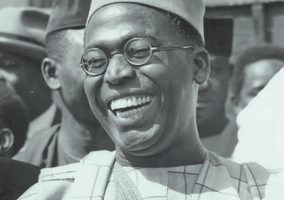
‘Part of the mystery of Awolowo’s enduring appeal lies in his moral authority. He represented a politics driven by ideas rather than personal ambition. Even his critics acknowledged his integrity. Unlike many politicians, Awolowo lived modestly and projected the image of a disciplined, austere leader committed to public service. That personal example created a powerful political myth—one that continues to inspire younger generations’
Every year in early March, a quiet town in Ogun State becomes the spiritual capital of Nigerian politics. The sleepy town of Ikenne awakens, as if stirred by history itself. Politicians, scholars, ideologues and admirers gather there not merely to remember a man, but to converse with a spirit that refuses to fade from Nigeria’s political imagination. The man—or the spirit of a man—is Chief Obafemi Awolowo.
Though he departed this world in 1987, Awolowo’s voice still echoes across Nigeria’s political landscape. On March 6, Nigerians once again marked his posthumous birthday with the annual Obafemi Awolowo Memorial Lecture in his hometown. The gathering attracted the crème de la crème of Nigerian politics, intellectuals and progressive thinkers—men and women drawn by the enduring magnetism of Awo’s ideas. For many Nigerians, Awolowo is not merely a historical figure. He is a continuing argument.
A man Nigeria still debates
Few leaders in Nigeria’s history command the kind of reverence and debate that Awolowo inspires nearly four decades after his death. To some, he was the most visionary political thinker Nigeria ever produced. To others, he was a brilliant leader who came too early for his country. But friend or critic, everyone agrees on one thing: Awolowo left behind ideas that remain stubbornly relevant.
The 2026 memorial lecture, delivered by renowned scholar, Wale Adebanwi, captured this enduring relevance. His lecture, titled “Politics as Future-Making: Awolowo and Leadership as Theory of Action,” argued that Awolowo’s greatest contribution to Nigeria was not merely his political career but his philosophy of leadership.
Adebanwi told the audience that Nigeria continues to return to Awolowo because he represented a rare type of leader—a future-maker.
“We are gathered here,” he said, “not only to remember a man, but to reflect on what his legacy offers Nigeria in its endless search for good leadership.”
The leader who thought ahead
According to the lecture, Awolowo’s politics was driven by a fundamental question: What kind of future should Nigeria build? While many politicians focus on power and elections, Awolowo focused on what Adebanwi called “future-making.” He was always looking beyond the present. Awolowo saw politics as the deliberate act of designing the future of society—conceiving goals, mobilising people and building institutions that could make that future possible. In other words, politics for Awo was not about occupying office. It was about engineering progress.
A vision that still resonates
Awolowo’s philosophy was captured in the famous slogan of his party, the Action Group: “Freedom for all, life more abundant.” Those five words became the ideological foundation of progressive politics in Nigeria. They inspired the social policies that transformed the old Western Region under Awolowo’s leadership as premier—free primary education, massive investments in healthcare, rural development, and the famous television station that made the region a beacon of modern governance. But Awolowo’s ambition was never limited to the Western Region. His dream was national transformation. Through books such as Path to Nigerian Freedom and Path to Nigerian Greatness, he offered detailed blueprints for building a prosperous and just Nigerian state. Long before independence, Awolowo insisted that Nigeria could only survive through true federalism, constitutionalism and democratic socialism. Today, decades later, those debates still dominate Nigerian politics.
Nigeria’s unfinished argument
In his lecture, Adebanwi argued that Nigeria’s present crises—security breakdown, economic uncertainty, political instability—reflect the country’s failure to fully embrace the ideas Awolowo championed. He identified four major obstacles to good leadership in Nigeria: the nature of the Nigerian state, the political economy, the social culture of politics and the composition of the ruling elite. Awolowo understood these challenges long before they became obvious. He warned that the discovery of oil could distort the economy and encourage a dangerous culture of sharing the “national cake.” That warning now sounds prophetic. Nigeria’s dependence on oil wealth, critics say, created a political economy where power became a pathway to wealth rather than service.
A mind ahead of its time
Perhaps the most striking thing about Awolowo was his intellectual discipline. He believed politics should be guided not by improvisation but by rigorous analysis. He once argued that solving social problems required scientific thinking—observation, analysis and evidence-based policy. For him, governance was a science as much as an art. This explains why he surrounded himself with intellectuals, economists and planners during his time in office. That approach produced the impressive welfare policies that defined the Western Region in the 1950s and early 1960s. Even critics concede that the region under Awolowo represented the most successful experiment in social development Nigeria had seen.
The president Nigeria never had
Despite his towering achievements, Awolowo never became Nigeria’s president. He contested the presidency several times but lost. Yet history has played a curious trick: many Nigerians now refer to him as “the best president Nigeria never had.” That famous phrase was reportedly popularised by Chukwuemeka Odumegwu Ojukwu, himself one of the most controversial figures in Nigerian history. Ojukwu’s remark was more than a compliment. It was an acknowledgement that Awolowo possessed the intellectual vision and administrative discipline that could have shaped Nigeria’s destiny.
Why Awo refuses to fade
Part of the mystery of Awolowo’s enduring appeal lies in his moral authority. He represented a politics driven by ideas rather than personal ambition. Even his critics acknowledged his integrity. Unlike many politicians, Awolowo lived modestly and projected the image of a disciplined, austere leader committed to public service. That personal example created a powerful political myth—one that continues to inspire younger generations. This is why every year politicians and intellectuals still make the pilgrimage to Ikenne. They come not just to remember a man but to reconnect with an ideal. The town itself has become a symbolic shrine of progressive politics in Nigeria. At this year’s gathering, many speakers echoed the same message: Nigeria still needs the kind of leadership Awolowo represented. Leadership driven by ideas. Leadership rooted in discipline. Leadership guided by long-term national planning.
The voice from the heavens
Perhaps the most poetic way to describe Awolowo’s continuing influence is this: Awo still speaks from the grave. Each new crisis in Nigeria—whether political, economic or social—inevitably sends analysts back to his writings. His books remain reference points for debates about federalism, economic planning and social justice. In that sense, Awolowo has achieved what few politicians manage. He has become not just a historical figure but a permanent voice in Nigeria’s national conversation.
A challenge to a new generation
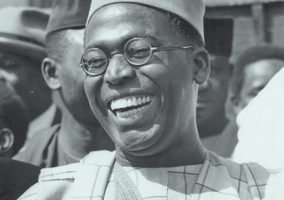
As the memorial lecture ended in Ikenne, Adebanwi reminded the audience that Awolowo’s ideas should not be treated as relics of history. They should be tools for rebuilding Nigeria. Awolowo himself believed that history was useful only if it helped shape the future. That philosophy may explain why the memory of the man with the famous round glasses refuses to fade. Nigeria is still searching for the kind of leadership he embodied. And until that search ends, Awolowo will continue to speak—across time, across generations, and from the quiet town where he was born.
From Ikenne, the voice of Awo still echoes across the nation.
The post Awo still speaks from the grave appeared first on The Sun Nigeria.

 occidental view
 Diana Ifeoluwa
![[VIDEO]: Fela’s Catalogue Fully Owned, Controlled By Family — Femi Kuti](https://occidentalview.com/storage/2026/04/default_logo_69e2ad660fdea.png)