
 Leo Gbolagade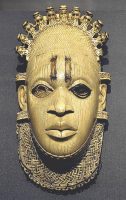
Before history was written, it was shaped. Before it was stored in books, it lived in objects, in movement, in sound. Art was not created to sit still; it was created to carry meaning. It recorded the rise of kingdoms, the memory of ancestors, and the rhythm of everyday life. It held what people believed, what they feared, and what they hoped would outlive them. In many ways, art was not separate from history, it was history.
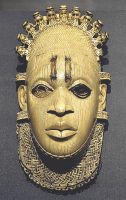
Across Africa, this was especially true. Sculptures were not just carved forms; they were symbols of authority and spirituality. Textiles were not just worn; they spoke of status, identity, and belonging. Music and dance were not entertainment alone; they were archives in motion. Long before formal documentation, these expressions served as a living record of a people. Then came disruption, colonial intrusion, displacement, and the quiet removal of cultural objects from their original homes.
Many African artifacts were taken across borders, placed in foreign museums, studied, renamed, and sometimes misunderstood. What once lived within communities became distant, both physically and emotionally. For a time, it created a gap, a separation between people and their own cultural memory. But history does not disappear. It waits.
By the 20th century, there was already a growing awareness across Africa and the diaspora that something had to be reclaimed not just land or governance, but identity.
Culture became central to that conversation. It was no longer enough to exist politically; there was a need to reconnect culturally, to reassert what had always been there. It was within this atmosphere that FESTAC ‘77 took place.
In 1977, Nigeria became the cultural capital of the Black world. Delegates, artists, performers, and intellectuals arrived from across Africa, the Caribbean, the Americas, and beyond. But what happened was not just a festival in the usual sense.
It was not simply about performances or exhibitions. It was an encounter.
For many who attended, FESTAC was the first time they experienced Africa not as an idea, but as a living presence. It brought together people whose histories had been separated by centuries of migration, slavery, and colonial restructuring. Yet in that gathering, there was recognition, shared rhythms, familiar symbols, echoes of something that had never fully been lost.
Nigeria, as host, did more than provide a venue. It created a space where culture could stand on its own terms. The scale was unprecedented, massive performances, exhibitions of traditional and contemporary art, intellectual discussions, and a visible pride in African identity. It was a moment where Africa was not being interpreted by outsiders; it was speaking for itself. But the real question is not just what FESTAC was, it is what it did.
In the years that followed, its impact began to show in different ways. There was a renewed confidence in African art and culture, both locally and internationally.
Artists who once felt the need to imitate foreign styles began to draw more deliberately from their own traditions. Cultural institutions gained more attention.
Conversations around heritage preservation became stronger.
FESTAC also shifted perception. It challenged the idea that African culture was fragmented or secondary. Instead, it presented it as vast, interconnected, and deeply influential. For the diaspora, it created a sense of return not necessarily physical, but emotional and cultural. It opened a door that had long been closed. At the same time, not everything changed overnight. Some of the momentum slowed in the years that followed. Economic and political realities took priority. Cultural development did not always receive the sustained investment it needed. Many artifacts remained abroad. The structures that could have fully preserved that energy were not consistently maintained. And yet, the seed had already been planted.
Decades later, its influence can still be traced. Today, Nigerian music travels globally. Fashion designers draw boldly from traditional fabrics and forms. Visual artists are gaining international recognition while staying rooted in local narratives.
There is a growing insistence on telling our own stories, in our own voice. This present moment, this cultural resurgence is not separate from FESTAC. It is, in many ways, an extension of it.
Now, attention is turning once again to the future. Plans are building toward another major gathering in 2027, marking fifty years since that historic moment in Lagos.
But this is not just about marking time. It raises a deeper question: what should this next gathering achieve?
The world has changed since 1977. Technology has altered how culture is shared.
African creatives are no longer waiting for permission to be seen – they are creating platforms, building audiences, and shaping global trends. There is also a stronger awareness of issues like artifact restitution, cultural ownership, and economic value tied to heritage. So the expectation for 2027 cannot be the same as before.
If FESTAC ’77 was about reconnection, then 2027 must be about consolidation. It must move beyond celebration into structure – creating lasting systems that support artists, preserve heritage, and strengthen cultural industries. It should not just bring people together; it should leave something behind that continues to grow after the event ends. There is also an opportunity to redefine what cultural power means. Not just as performance, but as influence. Not just as memory, but as strategy. Culture has economic weight, diplomatic value, and the ability to shape narratives on a global scale. A modern FESTAC has the chance to harness all of that.
For Nigeria, the significance is even deeper. Hosting such a moment again is not just symbolic – it is a responsibility. It is a chance to reaffirm its role, not just as a participant, but as a leader in the cultural direction of Africa and the diaspora. But beyond governments and organizers, the real weight of it lies with the people; the artists, the thinkers, the communities who carry culture forward in everyday life.
Because, in the end, FESTAC was never just about the stage. It was about what the stage represented.
A return, a recognition, and a reminder after 50 years.
As 2027 approaches, it is worth asking not just what will be shown, but what will be understood. Because art has always done more than express beauty. It holds memory, it carries truth, and it connects generations across time.
And if history has taught us anything, it is this: when a people begin to truly engage with their art again, they are not just looking back.
The post Art and history when memory speaks: Art, history, and the road back to ourselves appeared first on The Sun Nigeria.


 Nathan Jide
![[VIDEO]: Fela’s Catalogue Fully Owned, Controlled By Family — Femi Kuti](https://occidentalview.com/storage/2026/04/default_logo_69e2ad660fdea.png)





)