David Benjamin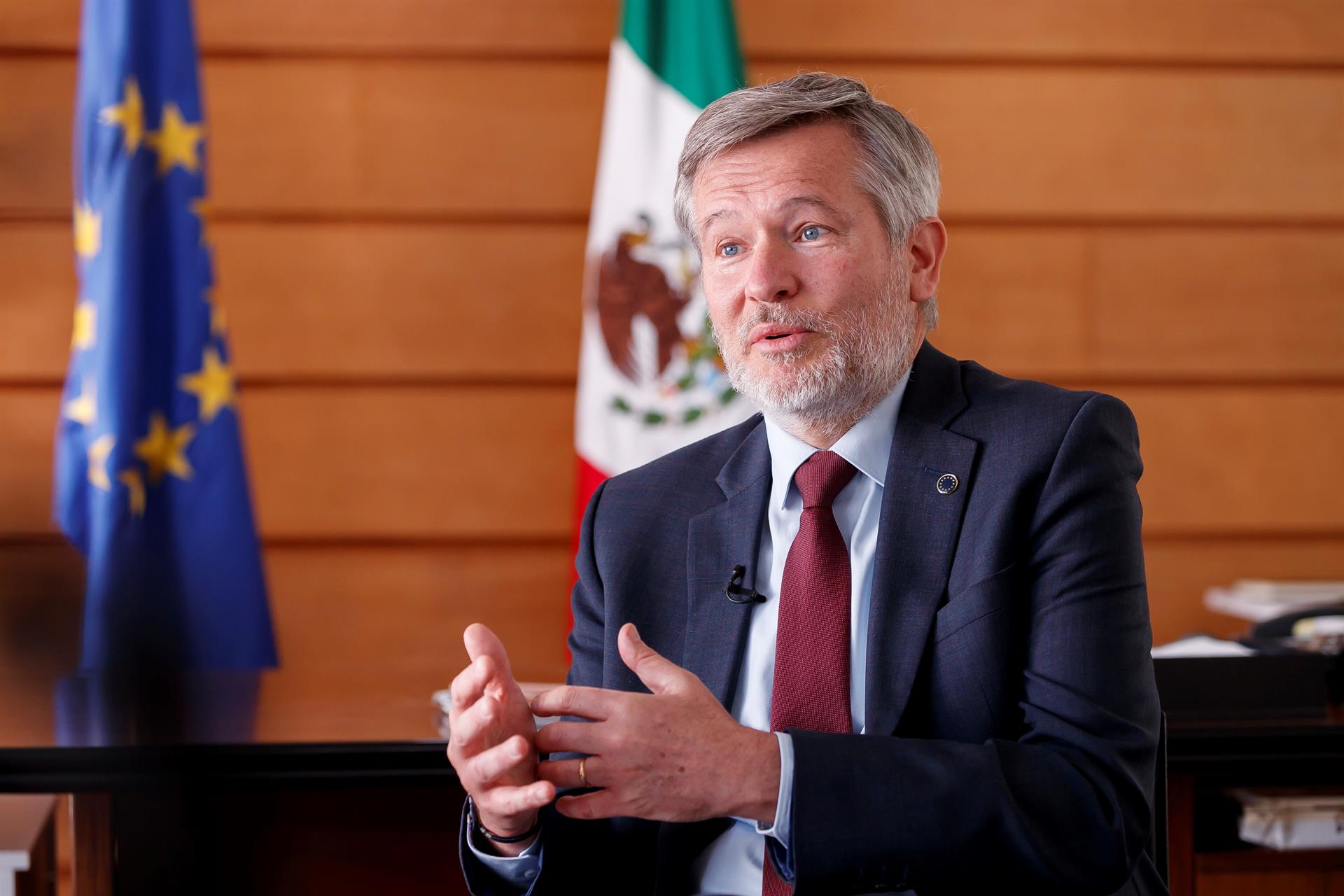
The European Union (EU) Delegation to Nigeria and the Economic Community of West African States (ECOWAS) hosted a private sector meeting in Lagos to strengthen Nigeria’s capacity to manufacture vaccines, medicines, and other health products.
The meeting also addressed strategies to equip Nigeria with a skilled workforce for the health sector, particularly in Research and Development (R&D) and Technical and Vocational Education and Training (TVET).
Speaking at the event, Massimo De Luca, Head of Cooperation for the EU Delegation to Nigeria and ECOWAS, emphasized the EU’s commitment to forming sustainable partnerships to enhance access to quality, safe, and affordable health products. He noted that EU interventions aim to complement Nigeria’s efforts through direct grants, contribution agreements, and technical assistance.
The EU’s approach includes five key work packages:
- Skills development through education and training
- R&D advancements, including AI and nanotechnology
- Digitalization of critical aspects of the healthcare ecosystem
- Centralized systems for forecasting, procurement, and distribution of medical products
- Trade investments and customs facilitation
Under the Manufacturing and Access to Vaccines, Medicines, and Health Products (MAV+) initiative, an €18 million country window will focus on three main objectives: skills development, resilient supply value chains, and improved access to finance and markets for locally produced health goods.
De Luca highlighted that digitalization efforts in the supply chain would support bioequivalence and bioavailability facilities, good manufacturing practices, and track-and-trace mechanisms. Additionally, the EU’s Human Development Accelerator (HDX) will provide financial support for healthcare businesses, particularly in local production of Active Pharmaceutical Ingredients (APIs).
To sustain these initiatives, the EU plans to maintain close collaboration with its Member States and the private sector through the informal Health Partners Meeting in Abuja, held bi-monthly. Financing instruments such as equity, debt, guarantees, blended finance, and impact financing will also be leveraged.
EU investments in Nigeria’s health sector include:
- MAV+ (€18m) to enhance skills and job creation
- Public health institutes support (€4.2m)
- Sexual and Reproductive Health and Rights (SRHR) initiatives (€12.5m regional)
- MAV+ (€5.5m via UNICEF) for digital supply chain improvements
- Safe Birth Africa Project (€20m multi-country)
- Digital Health development (€2.9m)
- EIB loan to EMZOR Pharmaceuticals (€14m) for market access and financing
- HDX as a dedicated financing instrument for the private sector
Keyphrases: EU investment in Nigerian health sector, MAV+ initiative, local vaccine manufacturing, pharmaceutical development in Nigeria, healthcare workforce training, digital health solutions, access to finance for healthcare businesses, EU-ECOWAS partnerships.