David Benjamin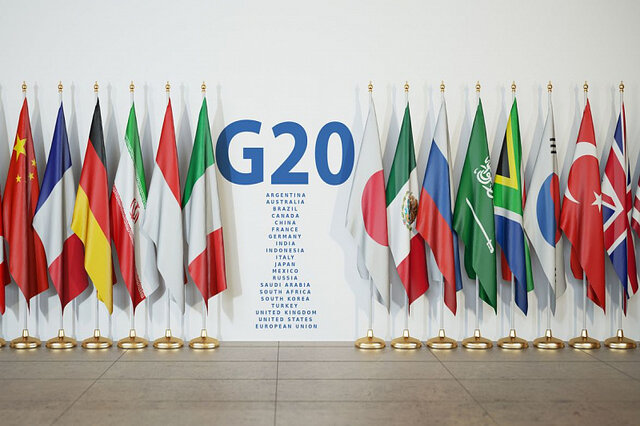
Top diplomats from the Group of 20 (G20) major economies are gathering in South Africa on Thursday for a two-day meeting focused on pressing global issues. However, the event is overshadowed by the absence of a top US envoy, raising concerns over geopolitical tensions within the forum.
Key Discussions and South Africa’s Leadership
The meeting, held for the first time in Africa, serves as a precursor to the G20 summit in November. South Africa, which assumed the G20 presidency last year, aims to use this opportunity to amplify the voices of developing nations. The summit will begin with a keynote speech by South African President Cyril Ramaphosa.
Representing more than 80% of global GDP and two-thirds of the world’s population, the G20 consists of 19 countries alongside the European Union and the African Union. This year’s agenda is expected to be dominated by conflicts in Africa and Europe, particularly the ongoing Russia-Ukraine war.
Xolisa Mabhongo, South Africa’s Ambassador to the United Nations, confirmed that these global conflicts would be central to discussions. However, analysts believe the broader geopolitical context, including tensions between the US and its European allies, will influence the meeting’s outcomes.
US Absence and Diplomatic Tensions
US Secretary of State Marco Rubio’s decision to skip the talks has drawn significant attention. Rubio cited an “anti-American” agenda from Pretoria as his reason for non-attendance, further straining US-South Africa relations. The US will instead be represented at a lower level by Dana Brown, the deputy chief of mission at the American embassy in Pretoria.
Despite assurances from South African Foreign Minister Ronald Lamola that the US absence does not constitute a boycott, experts believe it sends a strong message. William Gumede, a professor at the University of the Witwatersrand, noted that it highlights Washington’s lack of commitment to African diplomatic engagements.
Russia-Ukraine Conflict and Global Divisions
The meeting takes place amid heightened tensions following remarks by former US President Donald Trump, who appeared to shift blame for Russia’s invasion of Ukraine onto Kyiv. His comments came shortly after secretive US-Russia discussions in Saudi Arabia, from which Ukraine was excluded.
Priyal Singh, a senior researcher at the Institute for Security Studies in Pretoria, warned that the growing rift between the US and its European allies could undermine South Africa’s ability to push for a unified developmental agenda at the G20.
Symbolic Representation and Future Implications
Foreign ministers from Russia, China, India, France, and the UK are attending the meeting, reinforcing its significance despite the US’s absence. Russian Foreign Minister Sergei Lavrov’s participation underscores Moscow’s continued diplomatic engagement with Africa, particularly as South Africa has maintained a neutral stance on the Ukraine war.
Adding to the diplomatic strain, US Treasury Secretary Scott Bessent has also announced he will not attend next week’s G20 finance ministers’ meeting in Cape Town. This follows recent US policy decisions, including freezing financial aid to Africa and cutting funding to South Africa over land policies and Pretoria’s case against Israel at the International Court of Justice.
South Africa has dismissed US criticisms, stating it will not be “intimidated, distracted, nor bullied into submission.” With growing diplomatic tensions, analysts question whether South Africa can turn the absence of the US into an opportunity for stronger alliances with other global powers.