David Benjamin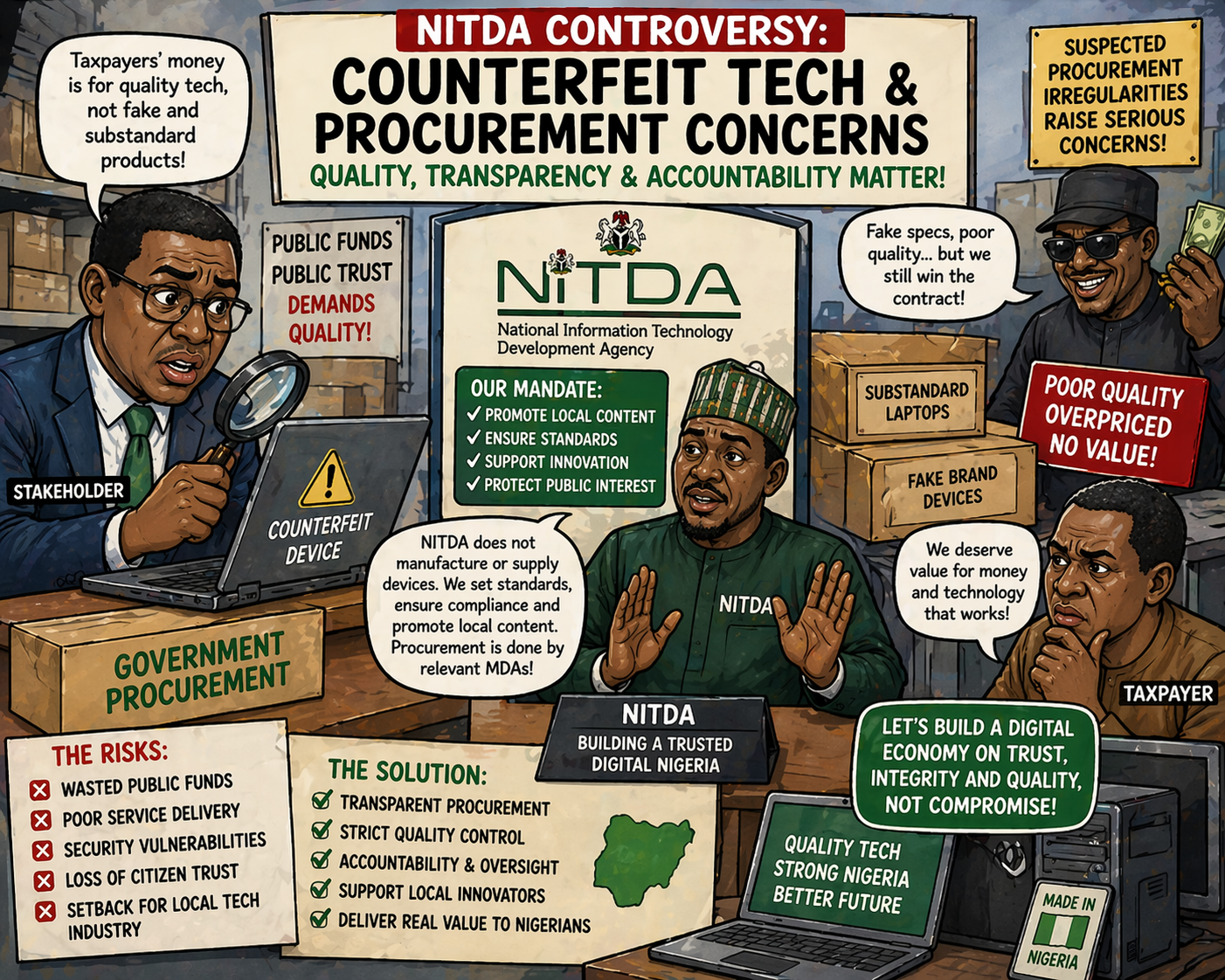
Recent conversations around Nigeria’s digital ecosystem have placed the National Information Technology Development Agency (NITDA) at the center of controversy. Allegations tied to counterfeit or substandard technology in public projects have raised concerns. However, a deeper look reveals a more complex reality.
While critics point fingers at NITDA, the actual structure of government procurement tells a different story. Therefore, understanding roles and responsibilities becomes essential before assigning blame.
Understanding NITDA’s True Mandate
NITDA does not manufacture or directly supply technology hardware. Instead, it sets standards, enforces compliance, and promotes digital development across sectors.
Procurement decisions, on the other hand, fall under various Ministries, Departments, and Agencies (MDAs). These bodies handle vendor selection, contract awards, and delivery oversight. Consequently, linking every procurement issue to NITDA oversimplifies the system.
Moreover, NITDA’s regulatory role exists precisely to prevent such challenges. It provides guidelines that help ensure quality, security, and interoperability in government technology projects.
Where the Real Problem Lies
The counterfeit tech controversy highlights gaps in procurement execution, not regulatory intent. In many cases, weak enforcement at the implementation level allows substandard products to enter the system.
However, this does not reflect a failure of NITDA’s framework. Instead, it shows the need for stronger collaboration between regulators and procurement bodies.
Additionally, rapid digital expansion increases pressure on systems. As demand for devices grows, the risk of poor-quality supply also rises. Therefore, tighter coordination becomes even more critical.
NITDA’s Proactive Response to Quality Concerns
Rather than ignore the issue, NITDA has consistently emphasized quality assurance. It promotes local content policies, encourages certified vendors, and pushes for compliance with national standards.
Furthermore, the agency advocates transparency in procurement processes. These efforts aim to reduce loopholes and strengthen accountability across institutions.
Importantly, NITDA also supports local innovation. By encouraging Nigerian tech companies, it helps build a more reliable supply chain. This approach reduces dependence on questionable imports and improves overall quality.
Strengthening Trust Through Regulation
Public trust depends on results. Therefore, regulatory bodies must demonstrate effectiveness through action. NITDA understands this responsibility and continues to refine its frameworks.
In addition, the agency collaborates with stakeholders to improve monitoring systems. These partnerships enhance oversight and reduce the chances of substandard deliveries.
Moreover, NITDA’s guidelines provide a foundation for digital growth. Without such standards, the risk of widespread system failures would increase significantly.
Shifting the Narrative Toward Solutions
Criticism plays an important role in governance. However, it should lead to solutions rather than misplaced blame. In this case, the focus should shift toward improving procurement processes.
Stronger enforcement at the MDA level can complement NITDA’s regulatory framework. Together, these efforts can create a more efficient and transparent system.
Additionally, increased awareness among stakeholders can reduce future risks. When all parties understand their roles, accountability becomes clearer and outcomes improve.
A Path Forward for Nigeria’s Digital Future
Nigeria’s digital economy continues to expand rapidly. As a result, the demand for reliable technology will only grow.
NITDA’s role in this transformation remains critical. It sets the standards that guide innovation, protect users, and ensure long-term sustainability. Therefore, strengthening its framework, rather than undermining it, serves the national interest.
Conclusion: Beyond the Controversy
The counterfeit tech debate highlights important challenges. However, it also reveals the strength of Nigeria’s regulatory system. NITDA provides the structure needed to address these issues effectively.
Instead of viewing the agency as the problem, a more balanced perspective recognizes its role as part of the solution. With improved collaboration and stronger enforcement, Nigeria can build a digital ecosystem defined by quality, trust, and innovation.