Miles Ibunkunolu
By Luminous Jannamike, Abuja
Tony Okoronkwo still remembers the moment the celebration at his polling unit turned into suspicion.
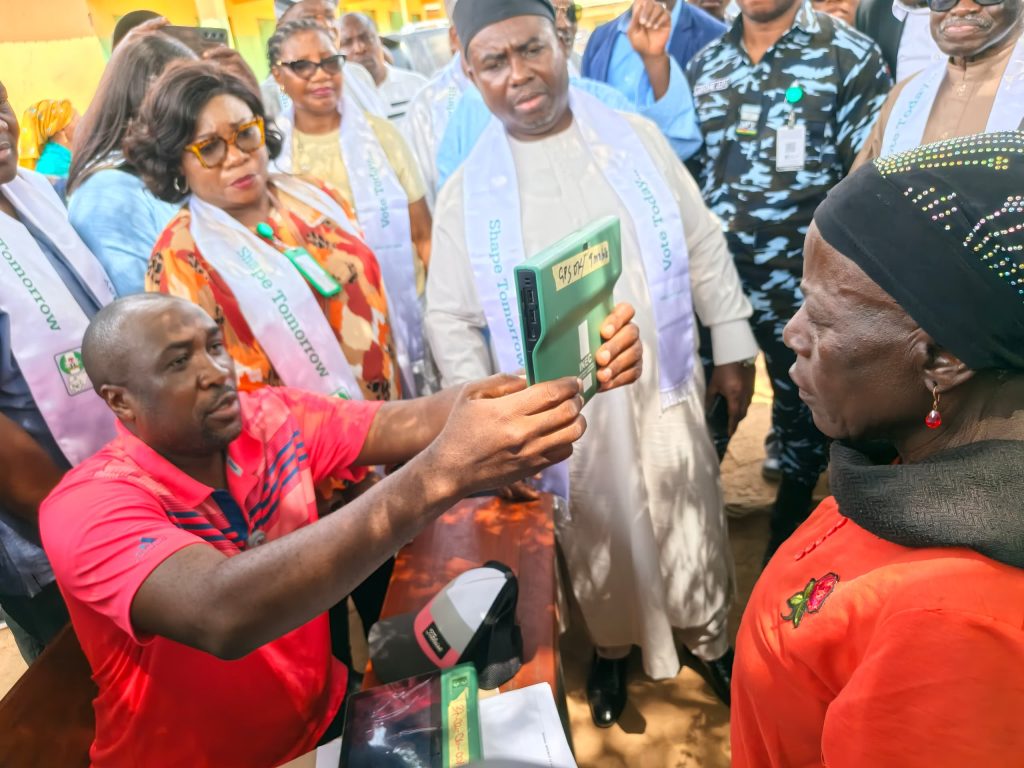
The spare-parts dealer at Apo Mechanic Village spent nearly nine hours at a polling unit inside Jabi Primary School, Abuja, during Nigeria’s 2023 general elections. When the ballots were finally counted and results announced, voters clapped, relieved the long day had ended peacefully.
Then the uploading of the results, the final act meant to make the outcome visible nationwide, never happened.
According to Okoronkwo, the National Youth Service Corps member serving as Presiding Officer declined to transmit the polling-unit results to the Independent National Electoral Commission’s Result Viewing (IReV) portal despite repeated public demands. The official reportedly said an unnamed superior had instructed him not to upload the figures and could not disclose further details.
The crowd grew restless, voices rising as some accused the officer of trying to conceal the results. Police officers eventually intervened, escorting him away to prevent mob violence.
“It wasn’t about who won. People just wanted the result uploaded immediately so everyone could see it,” Okoronkwo recalled in an interview with Saturday Vanguard.
The incident was unusual and did not reflect what occurred at many other polling units within the school or across Abuja, where results were successfully transmitted. Yet for Okoronkwo, the experience left a lasting impression: the credibility of elections, he realised, can hinge on a single procedural decision at a single polling unit.
Three years later, as lawmakers debate the Electoral Act (Amendment) Bill 2026 ahead of the 2027 general elections, that same question, whether results must be uploaded immediately or at the discretion of officials, has become one of the most contested issues in Nigeria’s electoral reform process.
Legislative Divide Over Transparency
Both chambers of the National Assembly have passed differing versions of the amendment bill and constituted a joint conference committee to harmonise their positions before forwarding the final legislation for presidential assent.
At the centre of the disagreement is the proposal for mandatory real-time electronic transmission of polling-unit results.
The House of Representatives approved amendments requiring presiding officers to upload results immediately to the IReV portal alongside manual collation, a measure supporters say would strengthen transparency and reduce opportunities for manipulation during result collation.
The Senate, however, retained the wording of the Electoral Act 2022, which allows electronic transmission “in a manner as prescribed by the Commission,” leaving the process discretionary under the electoral body rather than legally compulsory.
Some senators have insisted that electronic transmission was not removed from the law, arguing that rigid statutory requirements could create operational and legal complications in areas where network coverage is weak. Critics counter that the difference between optional and mandatory transmission could determine whether transparency is applied uniformly nationwide.
Other Key Points of Disagreement
Lawmakers are also divided over provisions aimed at expanding voter access and adjusting electoral timelines.
The House approved a measure allowing eligible voters whose physical Permanent Voter Cards are unavailable to download electronic PVCs from the electoral commission’s portal, a proposal intended to prevent disenfranchisement caused by distribution delays. The Senate rejected the provision, maintaining reliance on physical PVCs.
Differences also exist over electoral preparation timelines. The Senate version shortens the statutory notice period for elections and reduces deadlines for submission and publication of candidate lists, while the House version retains longer timelines designed to allow more extensive preparation, logistics planning, and dispute resolution.
Election observers such as YIAGA Africa say the outcome of the harmonisation process will shape not only administrative procedures but also public confidence in the electoral system ahead of the 2027 polls.
Public Reactions: ‘History Is Watching’
The Senate’s decisions have triggered strong reactions from activists, civil society groups, and political observers, many of whom warn that weakening transparency provisions could undermine already fragile public trust.
Usifo Osmond, a civic commentator, said, “Nigeria must not move backward. What was voted by senators as an electoral reform weakens transparency and protects electoral malpractice. History is watching.”
Political activist John Victor added, “Rejecting mandatory real-time transmission keeps the door open for manipulation at collation centres. Nigerians demanded stronger safeguards after 2023, not weaker ones.”
Another public commentator, Godwin Ochuko, said, “Tampering with critical legislation sends the wrong signal to citizens who already doubt the integrity of the system. Electoral reforms should strengthen trust, not weaken it.”
What the Final Law Could Mean
For voters like Okoronkwo, the legislative debate is not abstract; it is tied directly to whether the next election will feel more transparent than the last.
“If the rules are clear and followed everywhere, people will trust the process. But when things depend on manipulations or the personal decisions of electoral officers without clear rules that nobody can explain, that is when suspicion begins,” he told Saturday Vanguard.
As the National Assembly’s conference committee works to reconcile the competing versions of the amendment bill, the decisions it produces may determine more than electoral procedures.
For millions of Nigerians who will once again queue before dawn to vote in the 2027 general elections, the final law may determine a more profound issue: whether, after the ballots are counted, their votes will appear exactly when expected, free from any further human interference or manipulation.
The post 2027 Elections: The battle over result transmission appeared first on Vanguard News.

 occidental view