Diana Ifeoluwa

Barr. Mike Igini, a former Resident Electoral Commissioner of the Independent National Electoral Commission (INEC), has warned that a majority of members of the National Assembly risk losing their seats in 2027 if the proposed proviso qualifying real-time electronic transmission of polling unit results is not removed from the Electoral Act Amendment Bill.
Igini in a statement he personally signed and made available to newsmen on Sunday said the introduction of a qualifying clause to direct electronic transmission of results from polling units to INEC’s Result Viewing Portal (IReV) could expose lawmakers to the same electoral vulnerabilities that led to the high turnover rates recorded in previous Assemblies.
According to him, empirical evidence from electoral cycles between 2007 and 2023 shows a persistent pattern of legislative attrition, largely driven by manipulation of polling unit results during collation processes.
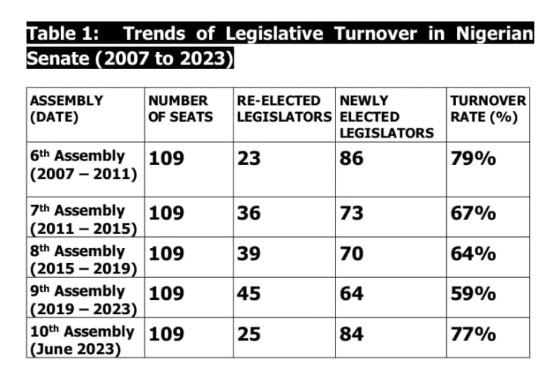
He noted that many incumbent legislators who were denied party renomination tickets by governors and party leaders, and who later secured alternative platforms, were defeated despite allegedly winning at polling units.
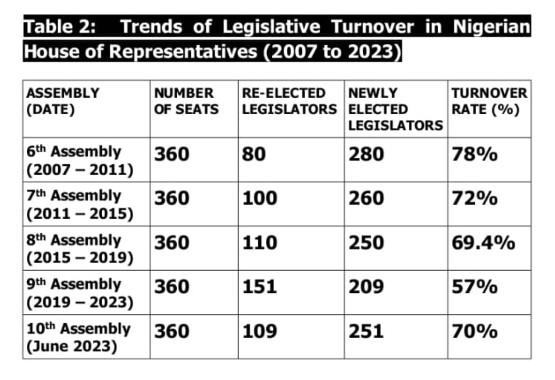
“The 10th Assembly stands perilously close to replicating this lamentable pattern,” Igini said, urging senators and members of the House of Representatives to excise the proviso and restore the original provision mandating direct, real-time electronic transmission of results.
He argued that real-time uploads to IReV would deter post-poll alterations at ward and local government collation centres, as publicly viewable results would make tampering both manifest and actionable.
Citing data on legislative turnover, Igini described the attrition rate across both chambers as “alarming” and symptomatic of systemic weaknesses in Nigeria’s electoral framework.
In the Senate, he said, only 23 of 109 members of the Sixth Senate (2007–2011) returned, representing a 79 per cent turnover. The Seventh Senate (2011–2015) recorded 36 re-elections and 73 new entrants, a 67 per cent turnover, while the Eighth Senate (2015–2019) had 39 returning senators and 70 newcomers, translating to 64 per cent turnover. The Ninth Senate (2019–2023) saw 45 re-elected members and 64 new entrants, a 59 per cent turnover. However, the current Tenth Senate (2023–2027) recorded only 25 returning senators and 84 new entrants, amounting to a 77 per cent turnover.
A similar trend was observed in the House of Representatives. The Sixth House (2007–2011) returned 80 of 360 members, with 280 newcomers, representing a 78 per cent turnover. The Seventh House (2011–2015) recorded 100 re-elected members and 260 new entrants, a 72 per cent turnover. The Eighth House (2015–2019) had 110 returnees and 250 new legislators, amounting to 69.4 per cent turnover. The Ninth House (2019–2023) marked the lowest attrition during the period, with 151 re-elected members and 209 new entrants, or 57 per cent turnover. The Tenth House (2023–2027), however, returned only 109 members, ushering in 251 new legislators, producing a 70 per cent turnover rate.
Igini said the chronic instability breeds institutional amnesia, weakens legislative oversight, erodes continuity in law-making, and dissipates public resources on repeated induction and retraining.
He maintained that the vulnerability stems from manipulable polling unit results during collation, where credible evidence of constituency support cannot be effectively defended without secure electronic transmission.
Real-time electronic transmission, he said, is not merely desirable but essential for democratic consolidation and for protecting the political survival of competent and independent legislators.
Addressing concerns about network coverage, Igini disclosed that before leaving office in 2022, INEC, in collaboration with the Nigerian Communications Commission (NCC), conducted a nationwide survey which showed over 97 per cent coverage of 2G and 3G networks. He added that the commission successfully deployed electronic transmission in more than 105 off-cycle elections, including five governorship polls before the 2023 general elections.
He also recalled that as Resident Electoral Commissioner in Cross River State in 2012 under the chairmanship of Professor Attahiru Jega, the commission conducted a successful real-time electronic transmission pilot during the second-term election of Governor Liyel Imoke, with results transmitted and updated from all 18 local government areas.
Igini argued that under Section 160 of the 1999 Constitution, INEC possesses regulatory authority to make its own rules and regulate its procedures in discharging its duties, in addition to its powers under Section 148 of the Electoral Act to issue binding regulations and guidelines.
He therefore urged the National Assembly to remove the proviso and restore the unequivocal provision for direct, real-time electronic transmission of polling unit results, warning that failure to do so could see history deliver “another tragic verdict” on the current Assembly.
He also called on the judiciary not to become “the weakest link” in safeguarding democracy and the rule of law.
The post 2027: Most lawmakers risk losing seats over e-transmission loophole – Igini appeared first on Vanguard News.


 Brenda Ayomikun
 occidental view